
PO Box 440140 Aurora CO 80014-0140
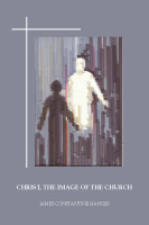
Title: Christ, the Image of the Church: The Construction of a New Cosmology and the Rise of Christianity
Author: James Constantine Hanges
Series: Contexts and Consequences: New Studies in Religion and History
Imprint: The Davies Group, Publishers
soft cover
284 pp.
USD 24.00
ISBN 978-1888570953
September 2006
When and how does devotion to Jesus become distinctive enough to be called Christianity? Scholars have long recognized that Jesus' earliest followers continued to see
themselves as Jews. Believing that Jesus lived on as the risen Christ did not demand that they part ways from the Jewish community. Even when non-Jews began to respond to the
preaching about Jesus, their belief in Jesus as the risen Christ did not alone distinguish them from the Jewish members of the Jesus movement.
The element that distinguished the first Christians must be sought elsewhere. Following Durkheim's description of the symbolic nature of group formation, this book argues that
the earliest distinctively Christian communities are the Pauline churches, which arose as the result of the apostle's introduction of ecstatic Christ-possession to Greeks, who
received the divine spirit free from mediation through the Torah. Paul's ethnically Greek communities symbolized themselves in the image of Christ as both a possessing and
possessed spirit, and projected this Christ as the image of the community, cosmologically in such an innovative way relative to Torah that it requires description as a distinctive
new religion.
Contents
Introduction
Abbreviations
Chapter 1 The Folly of the Cross
Chapter 2 The Scandal of the Cross
Chapter 3 Christ, the Image of the Church
Chapter 4 The Age of the Spirit
Chapter 5 Conclusion
Notes
Bibliography
Index
Reviews
“Christ, the Image of the Church is a fresh, original study that is sure to make a significant impact on the field of New Testament studies, as well as on religious studies in
general. One of its major theses; that religious experience, socially construed, is crucial to the understanding and interpretation of the emergence of new religions, is well
argued and persuasively demonstrated. It rightly challenges and corrects interpretations of these phenomena that attempt to explain it solely in terms of the history of ideas
and theological propositions. It is a mature work of scholarship and will surely make its mark on the field.”
— Adela Yarbro Collins,
Buckingham Professor of New Testament Criticism
and Interpretation, Yale Divinity School.
“Hanges is not the first to look to Pauline circles for the earliest instances of something different enough from Judaism that it could be called 'Christianity' ... but what
Hanges brings to the table is a fresh theoretical argument for this assertion. Moreover, he mounts this argument within a larger context of contemporary Pauline
scholarship that over the last several decades has seemed to be swinging in the opposite direction. I find Hanges' contribution attractive and most helpful. He has offered as
succinct a solution as I have seen to handling some important issues that have preoccupied Pauline studies for a long while, and I would anticipate that his book is going to
be very well-received…. I wish I had had Hanges' book as one of the studies for analysis by my students.”
— Michael A. Williams, Professor and Chair
Department of Near Eastern Languages & Civilization
University of Washington.
Author
James Hanges (PhD, University of Chicago) teaches in the Department of Comparative Religion at Miami University of Ohio.



- Contemporary European Cultural Studies
- Contexts and Consequences
- Critical Issues in Higher Education Administration
- Critical Studies in the Humanities
- Deferrals and Disciplines (Noesis Press)
- Emergence (Noesis Press)
- Intersections: Theology and the Church (Noesis Press)
- New Studies in Idealism (Noesis Press)
- Thinking European Worlds






The Davies Group, Publishers
an independent scholarly press